Published Date
April
2026
Sunday
Accelerating role of AI in higher education research and industry collaboration (THE Asia Universities Summit 2026)
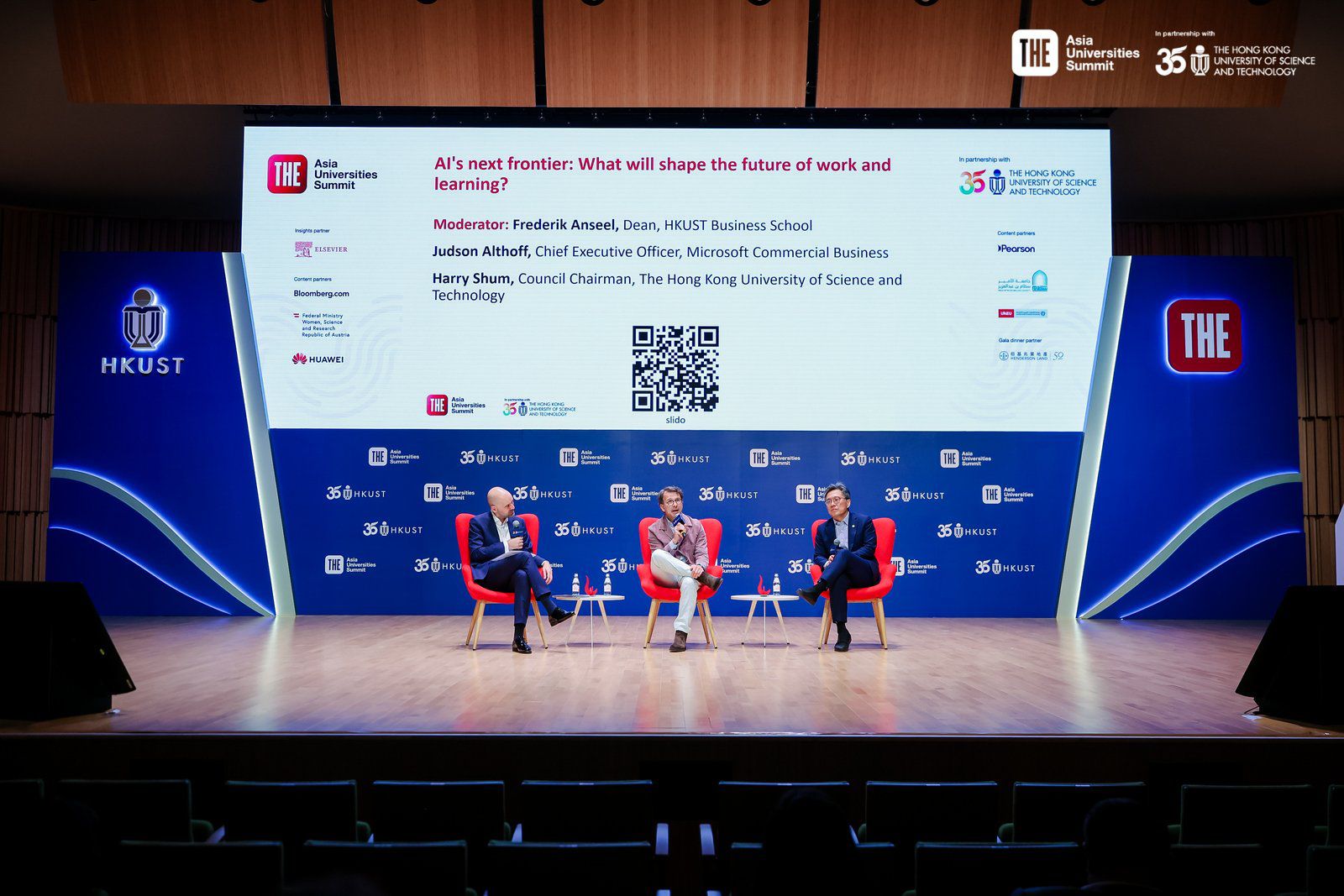
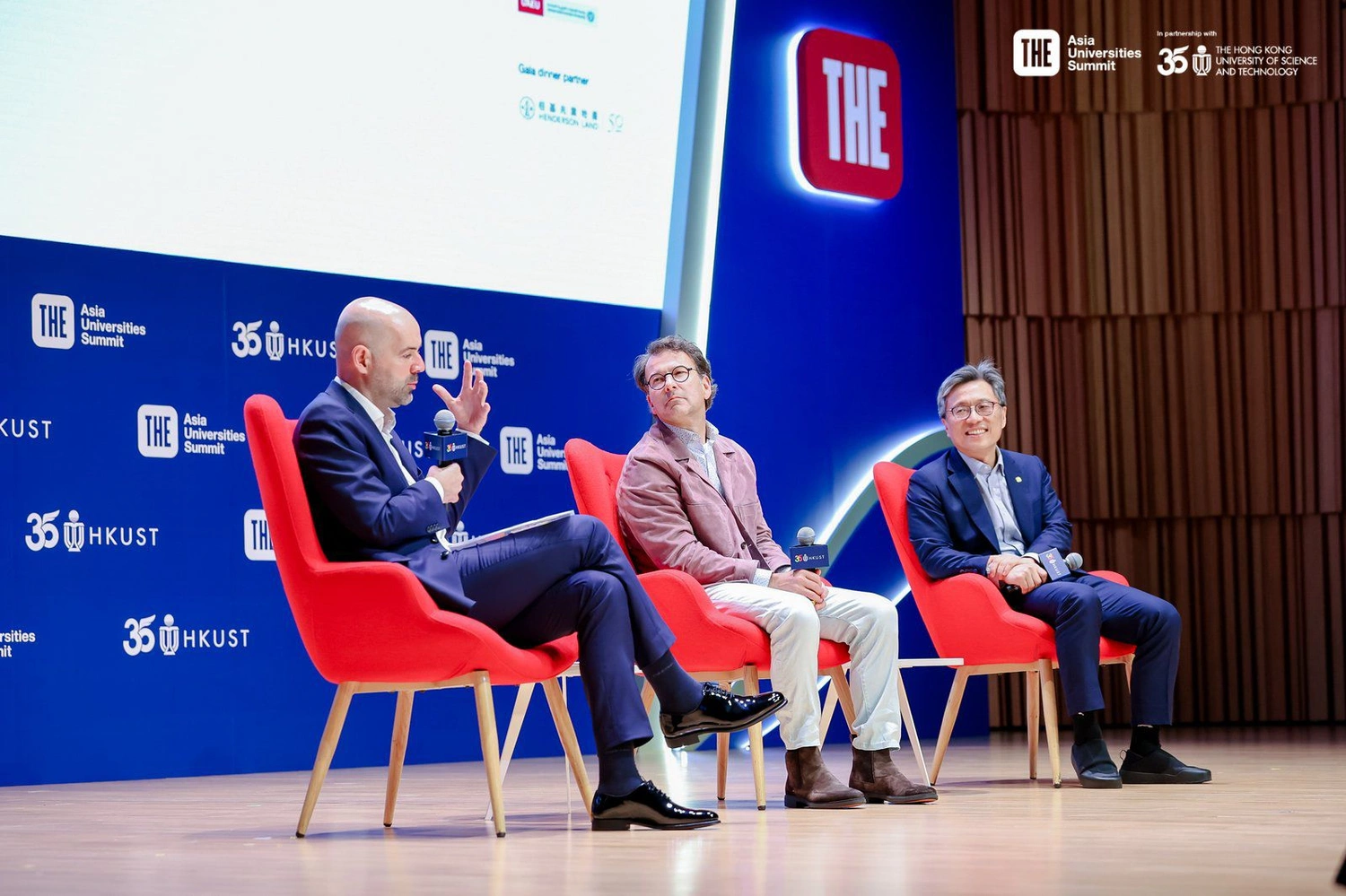
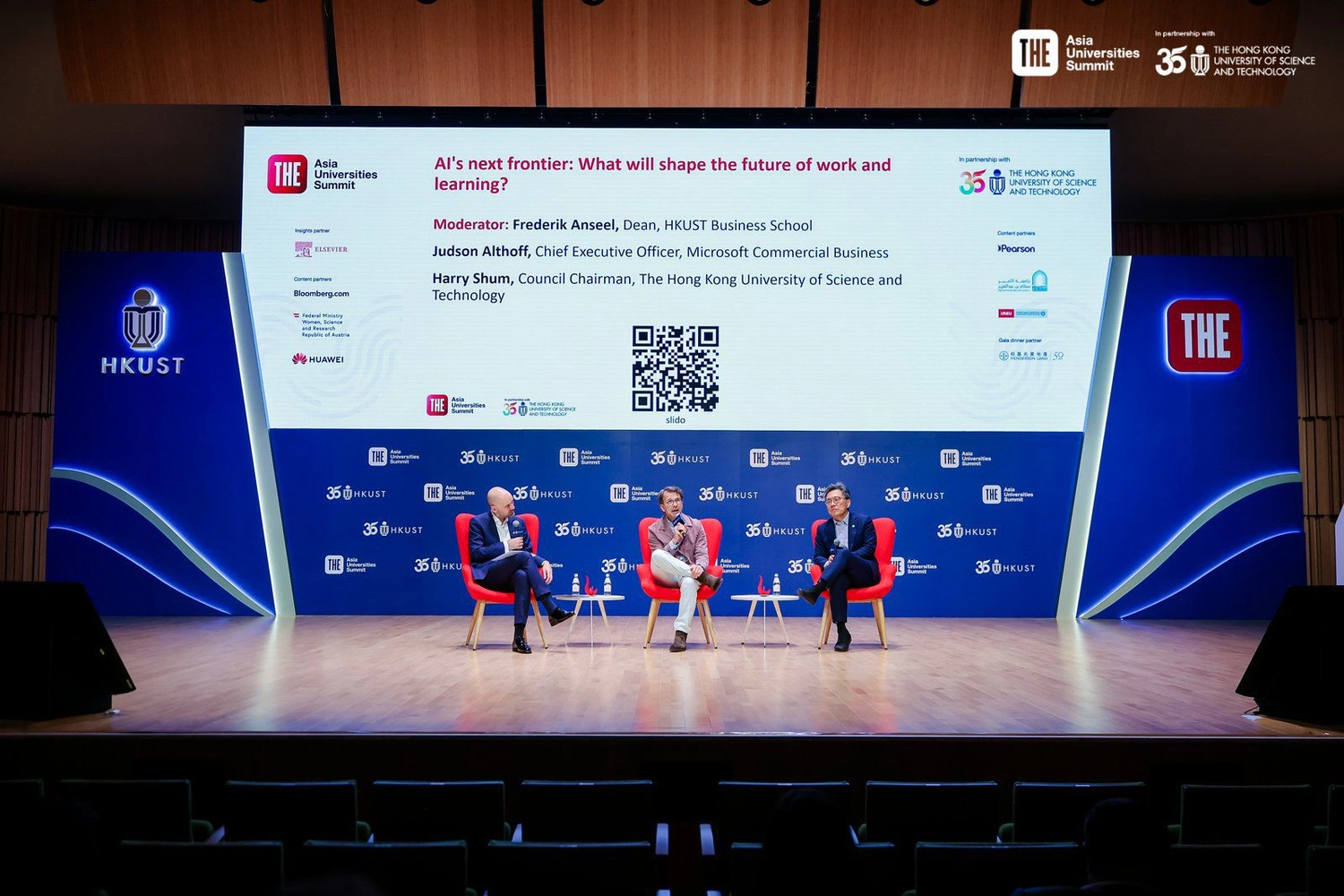
Dr. Carmen Z. Lamagna and Dulce Corazon Z. Lamagna, Members of the Board of Trustees of American International University Bangladesh (AIUB), attended the THE Asia Universities Summit 2026 and participated in a high profile fireside chat that explored the accelerating role of artificial intelligence in higher education, research and industry collaboration.
The session — moderated as a forward looking conversation — featured Judson Althoff, CEO of Microsoft’s Commercial Business, and Harry Shum, Chairman of the Council at the Hong Kong University of Science and Technology (HKUST). The discussion framed AI as more than a technological trend: it is already becoming foundational infrastructure that universities, businesses and governments must actively shape and govern. Althoff described Microsoft’s approach to co innovation with customers and institutions to democratize AI access, scale cloud and model capabilities, and help universities translate AI advances into employability and real world impact. Shum emphasized the astonishing speed of generative AI breakthroughs, cautioning that while the present tools (large language models, generative image systems, agents) are transformative, more profound changes are likely ahead.
Key themes from the discussion and summit notes:
Pace and urgency: Speakers and attendees repeatedly noted how quickly AI capabilities are advancing. The pace demands sustained institutional investment—time, energy and strategic focus—to keep curricula, research and governance aligned with rapidly evolving technology.
Education shift — from how to why: A critical point raised was the need to rebalance teaching. Where academia has historically focused on “how” to use tools, the new imperative is to teach “why”: critical thinking, ethical reasoning, contextual judgement, explainability and leadership. These human attributes will be essential as AI systems become more capable.
Responsible AI and governance: Limitations of current models—lack of full explainability, potential biases and ethical risks—underscore the need for governance frameworks. Panelists recommended ethics committees, robust institutional policies and trustworthy AI platforms that reduce vulnerability to model shifts while protecting students, staff and research integrity.
Democratizing intelligence and access: AI has the potential to broaden access to knowledge and accelerate innovation across disciplines. Microsoft’s partnerships with universities were highlighted as pathways to ensure these tools benefit diverse learners and institutions rather than deepening inequity.
Practical adoption and orchestration: Beyond theory, the conversation stressed practical skills: teaching students and staff to select, orchestrate and use AI agents and tools productively. The aim is to position AI as an augmenting force that boosts creativity, problem solving and productivity—not merely as automation that replaces tasks.
Productivity vs. purpose: While AI can drive efficiency, the speakers warned against letting productivity gains override deeper educational and societal priorities. Universities should use AI to unlock creative potential and address pressing problems (research, healthcare, societal challenges), not just to optimize processes.
Call to action: The discussion closed with a call for cross sector collaboration—universities, industry and governments working together to tell the right stories about AI, design human centered solutions, and create pathways that prepare graduates for an AI driven future.
Implications for AIUB
Dr. Carmen Z. Lamagna and Dulce Corazon Z. Lamagna’s attendance signals AIUB’s engagement with global higher education leaders on AI strategy and governance. The takeaways reinforce priorities for AIUB: integrate ethics and explainability into curricula, build partnerships for practical AI skills and research, strengthen governance mechanisms (such as ethics review and institutional policies), and focus on fostering critical thinking and leadership so graduates can harness AI responsibly.
The THE Asia Universities Summit 2026 conversation made clear that AI is reshaping the landscape of higher education. For institutions like AIUB, the challenge and opportunity are to adapt curricula, governance and partnerships so students are not only proficient with AI tools but also equipped with the judgment, values and leadership to apply them for societal benefit.